 Water Filtration for Preparedness: An Urban Prepper Detective Guide
When taps run dry, life gets sharp fast. In the UK, water is usually safe. But things still go wrong. Boil notices happen. Treatment plants fail. Flood water gets into pipes. One bad week can turn into a real problem.
If you care about preparedness, water comes before food. This is true for emergency preparedness and full disaster preparedness. You can miss meals. You cannot miss hydration.
This guide covers water filtration and water treatment in plain terms. It is written for home use, flats, and city life. It also covers outdoor use.
Filtration vs purification: know the difference
People mix these terms. That leads to bad choices.
Filtration removes physical things from water. Depending on the filter, this can include dirt, parasites, and many bacteria.
Purification means making water safer to drink by killing germs. This is often done by boiling or adding a disinfectant.
Here is the key point. A filter that removes germs may not remove chemicals. A filter that improves taste may not remove germs. Always match the tool to the risk.
Also, some water cannot be made safe at home. If it has fuel, toxic chemicals, or radioactive material, boiling and home filters may not fix it. Use bottled water or a safe source.
Urban survival tips: treat water like a threat until proven safe
Here are urban survival tips that stop panic:
-
Store some water at home, even if you trust the mains.
-
Learn what a boil notice means, and act at once.
-
Keep a filter, plus a back up way to disinfect water.
-
Avoid crowds at shops when everyone rushes for bottles.
UK water firms can issue boil notices as a safety step. The Drinking Water Inspectorate explains boiling as a reliable way to kill or disable bacteria, viruses, and parasites when advised.
How to purify water: a clear method that works
If you want how to purify water steps you can follow under stress, use this order.
-
Find the best source you can
-
Treated mains water is still best, unless told otherwise.
-
If you must use surface water, choose flowing water over still water.
-
Pre-filter if it is cloudy
-
Let it settle, then pour off the clear part.
-
Or strain it through clean cloth or a coffee filter.
-
Filter
-
Use a survival water filter suited to your job, home or mobile.
-
Follow the maker’s flow direction and clean rules.
-
Disinfect
-
Boil when you can. Bring water to a rolling boil, then cool it. UK boil notice guidance stresses boiling as a strong option.
-
If you cannot boil, use household bleach only if the label supports disinfection, and follow dose and wait times.
-
Store it safe
-
Use clean containers with lids.
-
Keep them cool and out of direct sun.
This is emergency water purification in real life. Filter first when water is dirty. Then disinfect when you need germ kill.
What you are trying to remove
Most home and field systems focus on germs and particles:
-
Protozoa like Giardia and Cryptosporidium
-
Bacteria like E. coli
-
Sediment that clogs filters and tastes foul
UK boil notices are often about possible microbial risk. Cryptosporidium has driven real boil advice in the UK.
Viruses are a special case. Many common “hiking” filters do not remove viruses. If viruses are a concern, add a disinfection step, or use a purifier built for that job.
Preppers water filtration: the layered approach
Preppers water filtration should not be one product. It should be a system.
A simple and strong layer stack looks like this:
-
Stored water for the first 24 to 72 hours
-
An emergency water filter for longer issues
-
A back up method for emergency water purification (boil or chemical)
-
A plan for hygiene water, not just drinking water
This matters because filters clog, freeze, get lost, or break. Redundancy is real preparedness.
Emergency water filter types, and where each fits
There are several types of survival water filter. Each has a place.
Gravity water filter (home and camp)
A gravity water filter uses height and time. You pour water in the top. It drips into the clean chamber below.
This style works well for bug-in plans. It is quiet. It needs no pumping. It can produce water while you do other tasks.
Gravity also works in the field. Many camping systems use a dirty bag hung from a tree, with a filter inline.
Squeeze and inline filters (fast and light)
These are common in hiking kits. They are small, simple, and quick.
They are good for a bug out bag because weight matters. They need clean habits and regular backflushing.
Pump filters (controlled, steady output)
Pumps work well when water is silty. They give you control, but need parts and care.
Straw and bottle filters (simple, personal use)
These are personal tools. They are not ideal for cooking water for a family.
Sawyer filter: a common prep choice for mobility
A Sawyer filter is a classic in the backpacking space. Sawyer’s own specs for the MINI state 0.1 micron filtration. They market it as removing bacteria and protozoa.
This is why it shows up in many survival gear lists. It is small, light, and can be used as:
-
a squeeze filter
-
inline on a hydration pack
-
part of a gravity setup
Use it as a backpacking water filter and also as a spare in home kits. Just remember the virus point. Most 0.1 to 0.2 micron hollow-fibre filters target bacteria and protozoa. Viruses usually need an added disinfect step, or a true purifier.
LifeStraw: simple, personal, and easy to carry
LifeStraw is well known for personal use. On their product page, they state a 0.2 micron pore size and claims around bacteria and parasite reduction, plus microplastics and cloudiness.
This makes it a practical pocket tool, not a full household answer. It is best viewed as:
-
a personal backup
-
a glove box item
-
a small part of a wider plan
If you need water for cooking, washing, and kids, you want larger capacity tools as well.
Berkey water filter: why gravity systems appeal to bug-in plans
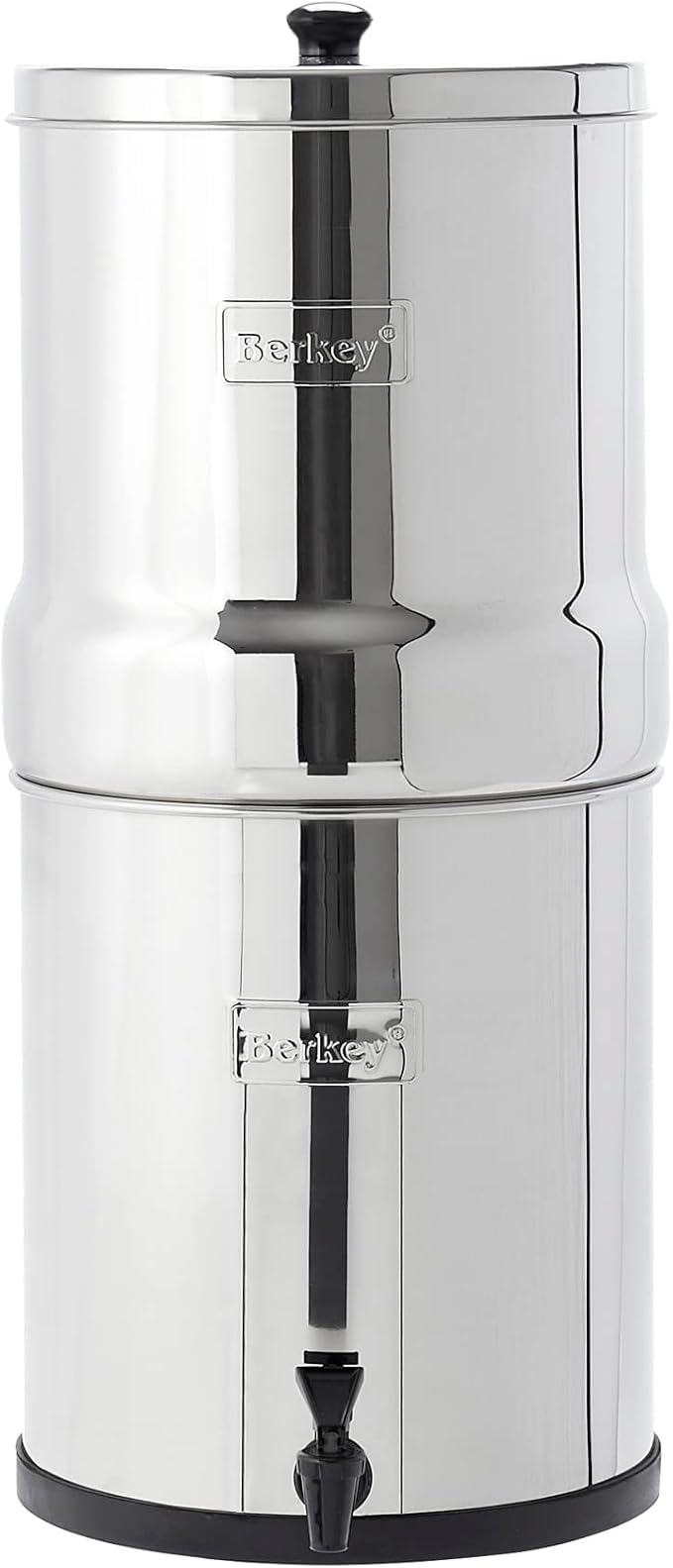
A berkey water filter is a well-known countertop gravity system. Preppers like gravity units because they can run with no power and low noise.
People often search big Berkey because it is a common mid-size unit. Some UK and EU sellers list the Big Berkey capacity as about 8.5 litres, with other models above and below.
Berkey water filter sizes: what the names usually mean
When people ask about berkey water filter sizes, they usually mean capacity and household fit. One UK/EU Berkey retailer lists models like:
-
Travel Berkey (about 5.7 L)
-
Big Berkey (about 8.5 L)
-
Royal Berkey (about 12.3 L)
-
Imperial Berkey (about 17 L)
-
Crown Berkey (about 22.7 L)
Those numbers help you match the unit to your home routine and storage space.
A hard truth about certifications and claims
If you want to be strict, look for independent certification where possible. NSF explains standards such as NSF/ANSI 42, 53, and 401, which relate to performance claims and testing.
On at least one Berkey UK/EU FAQ page, they state Black Berkey elements are not NSF certified and describe certification as optional.
What should you do with that? Keep it simple:
-
Do not buy based on hype words.
-
Read the claims, then check what testing backs them.
-
For germ risk, still keep boil or chemical disinfection as a back up.
Best survival water filter: choose by your use case
People want a single answer for the best survival water filter. There is no one winner. Your best option depends on your risk and your setting.
Use this quick test:
-
Home, family, bug in: gravity system plus a disinfect back up.
-
Solo carry: a small filter like a straw or squeeze unit.
-
Bug out: lightweight squeeze or inline filter, plus chemical tabs.
-
Travel or higher virus risk: consider a purifier rated for viruses.
If you want a simple rule, do not rely on one device. Pair an emergency water filter with a disinfection method such as Aquatabs. That covers more threats.
Build a survival water filtration system that does not fail
A survival water filtration system should keep working when things get awkward.
Here is a strong, realistic setup for most UK homes:
-
Stored water for immediate use
-
A gravity unit or countertop system for daily output
-
A portable survival water filter for trips and backup
-
A chemical disinfect option for emergency water purification
-
A kettle, stove, or fuel plan for boiling when advised
This is not expensive if you build it in layers over time.
Maintenance: where most people fail
Filters do not fail in adverts. They fail in kitchens.
Common errors:
-
Letting filters freeze (hollow fibre can crack)
-
Not backflushing squeeze filters
-
Using cloudy water without pre-filtering
-
Storing treated water in dirty containers
-
Assuming filters remove chemicals when they do not
A clean routine matters more than brand names.
Preparedness for beginners: start with the basics
If you are new, keep it simple. Preparedness for beginners should be calm and cheap.
Start here:
-
Store a small water buffer at home.
-
Buy one emergency water filter you will actually use.
-
Learn boiling rules and bleach rules for your country.
-
Practice once, at home, with your kit.
That is real preparedness. It also builds confidence.
Final take: water filtration is a skill, not a product
Water planning is part of survival gear, but it is also a habit.
For emergency preparedness, you want a system you can run when tired. For disaster preparedness, you want layers that survive mistakes.
Do these three things and you will be ahead of most:
-
Store some water.
-
Filter when you need to.
-
Disinfect when you must.
And always follow local boil notices and health advice when issued.